
We tested the P1S Combo for several weeks and used it for both quick prototypes and longer, full-color prints. It felt ready out of the box and the setup was faster than we expected. The enclosure and auto-leveling cut down on failed prints, and the printer handled PLA and PETG without fuss.
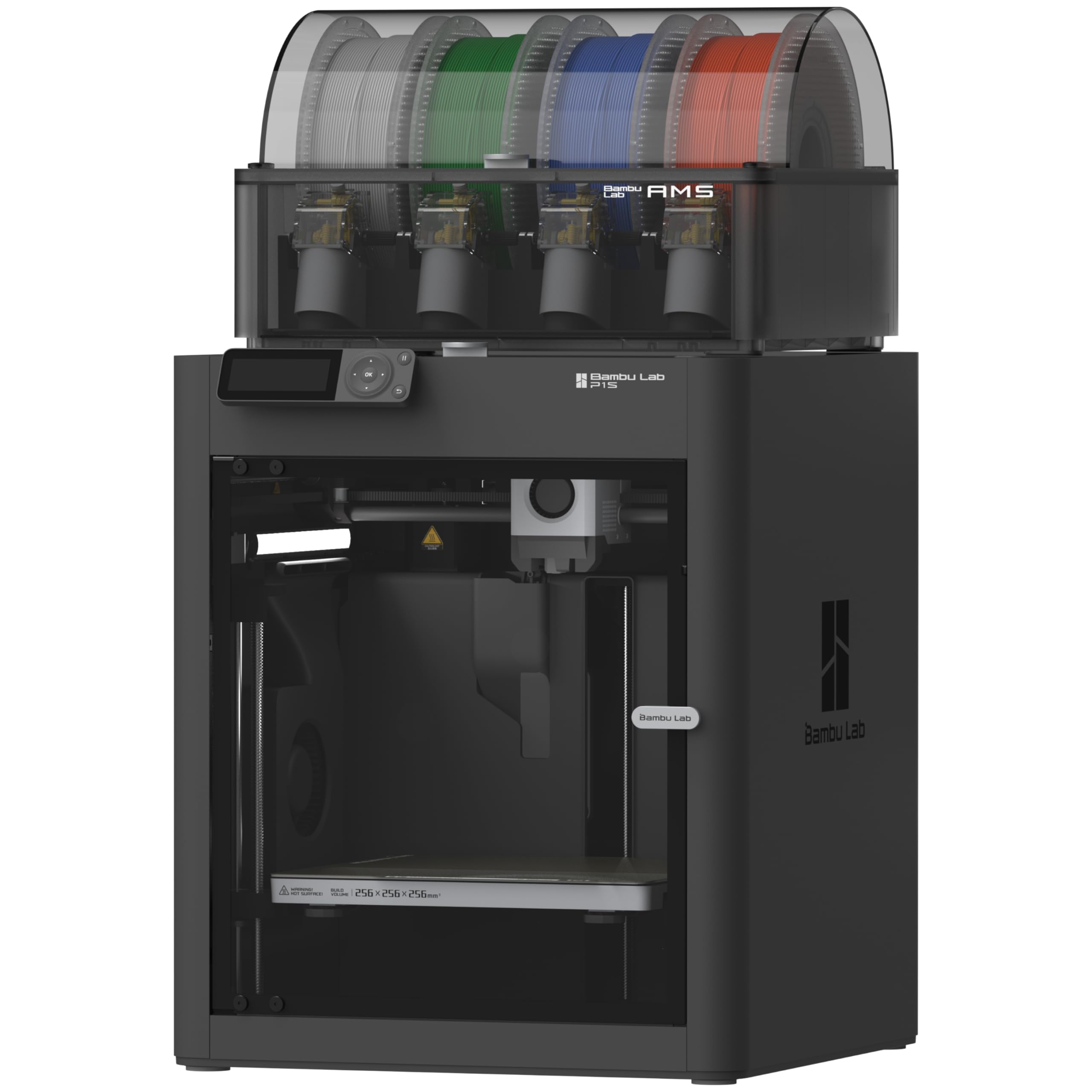
The AMS system lets us run multi-color jobs without swapping spools, which saved time on complex pieces. High-speed printing is noticeable on simple parts, though very fine details sometimes needed slower settings. The machine felt solid and the enclosed frame helped with tricky filaments, but very stiff materials like PC required extra tuning.
Bottom Line
We recommend the P1S Combo if you want fast, mostly hassle-free multi-color and multi-material printing.

- Up to 16 Colors: Bring your designs to life with vibrant multi-color/multi-material printing capabilities, perfect for s…
- 500mm/s and 20000 mm/s² Acceleration True High Speed: Don’t wait around for your masterpieces. Lightning-fast printing s…
- Enclosed Design: Fully enclosed body improves print performance for advanced filaments. Automatic Bed Leveling: Say hell…
Overview Bambu Lab P1S Combo 3D Printer
We spent time running the P1S Combo with the AMS and came away impressed by how smoothly it prints. Setup felt faster than many printers we’ve tried, and the enclosed build helped with tricky materials.
Speed is real — prints finish much sooner than on older hobby machines — though dialing in multi-material jobs took a few tries. The touchscreen and app make sending files easy, but the AMS adds complexity and needs careful filament routing.
Overall, the P1S Combo gives high-quality, reliable prints for its price. It’s a strong step up for hobbyists who want faster, cleaner results and are ready to manage a slightly more advanced system.
Multi-Color and Multi-Material Printing
We tested the combo with the AMS and ran a few multi-color prints. Feeding different filaments worked smoothly once the AMS was connected, and swapping colors mid-print produced clean transitions on modest-sized parts.
The good: color changes aligned well and multi-materials like PLA plus TPU printed without major jams. The enclosed build helped keep flexible filaments steady.
The bad: setup takes patience—filament loading and tuning the AMS felt fiddly at first. Very detailed multi-color pieces sometimes showed tiny seam lines where extruders switched.
Overall, the system handled multi-color and multi-material jobs better than most single-extruder printers we’ve used, but expect a short learning curve to get reliable, flawless results.
High-Speed Performance
We pushed the printer into fast modes and noticed real speed gains without a big drop in detail. Prints finished much quicker than our older machines, and simple parts came off clean at higher feed rates.
Complex pieces showed some ringing and tiny surface waves when we pushed to the absolute top speeds, so we slowed down critical features to get the best finish. The feeder and AMS handled quick color changes smoothly, but multi-material jobs need a bit of tuning for perfect results.
Overall, the P1S combo gives fast, usable prints for prototyping and batch work, as long as you accept a trade-off between peak speed and the finest surface quality.
Enclosed Build and Filament Compatibility
We tested the P1S combo in our small workshop and found the enclosure helps keep prints stable. It holds heat well, so materials that need warmth print cleaner and with less warping.
The enclosed chamber made PLA, PETG, and TPU easy to run. We also tried mid-temp nylons and saw better layer adhesion, though these may still need tuning and good ventilation. The AMS feeder for multi‑color jobs worked smoothly for us, but loading many spools can be fiddly in tight spaces.
The enclosure limits dust and drafts, which improved first-layer success. On the downside, the build area feels a bit compact for very large parts, and printing high‑temperature specialty filaments may require extra settings or external ventilation.
Easy Setup Experience
We got the P1S combo out of the box and started right away. The main parts fit together cleanly and the instructions were easy to follow, so we had the printer ready faster than many older machines we’ve used.
Auto bed leveling and guided prompts cut down fiddling. Connecting the AMS and routing the PTFE tubes took a few extra minutes, and we wished cable routing felt a bit tidier out of the box. Overall, setup felt designed for beginners but still quick for experienced users.
Within about 30–45 minutes we were printing. Small annoyances didn’t stop us: a slightly optimistic “15-minute” claim and a bit of time spent adjusting filament paths. The process still felt smooth and reliable.
Automatic Bed Leveling
We found the auto bed leveling on the P1S to be a real time-saver. After a few test prints it reliably adjusted the bed so first layers stuck well and we avoided frequent manual tweaks.
The system handled small irregularities without fuss, though very uneven beds still needed a quick manual check. Calibration runs are fast and usually require no intervention after the initial setup.
On the downside, the probe sometimes retries when the nozzle or sensor gets slightly dirty, so we cleaned the tip occasionally. Overall, the auto-leveling made prints more consistent and lowered the stress of getting good first layers.
User Experience and Software Ecosystem
We set up the P1S combo and ran several prints right away. The app and web interface let us send jobs over Wi‑Fi, pick prints from a library, and monitor progress without fuss.
Auto bed leveling and filament handling worked reliably, so most prints started cleanly. The multi-material system switches smoothly, but routing and spool placement need a little thought for tidy setups.
The software gives useful presets and quick tweaks, though advanced tuning can feel hidden. Firmware updates were straightforward, and notifications kept us informed.
Overall the interface speeds up routine printing and makes multi‑color jobs practical, but power users may miss easier access to deeper settings.
Pros and Cons
We used the P1S Combo for several prints and found clear strengths and a few drawbacks worth noting.
Pros
- Fast printing speed. We saw noticeably quicker print times compared to older FDM machines, which saved us time on larger jobs.
- Multi-material/color support. With the AMS attached, switching filaments felt smooth and let us make colorful or mixed-material parts without manual swaps.
- Reliable auto-leveling and enclosed design. Bed leveling worked well and the enclosure helped with warping on PETG and ABS.
- Easy setup and UX. We had the unit ready to print in a short session and the app made sending jobs simple.
- Solid build quality. The machine felt sturdy and well put together during transport and use.
Cons
- True setup time can vary. Although advertised as very quick, our full setup and learning took longer than the shortest claims, especially when routing tubing and configuring AMS.
- AMS placement limits. The long PTFE tubes help, but positioning the AMS requires extra space and planning on our bench.
- Not ideal for reinforced filaments. The printer handles many common filaments well, but it’s not recommended for carbon- or glass-fiber reinforced materials.
- Cost and upgrades. The combo adds convenience but raises the price. Some users may prefer adding AMS later to spread costs.
Customer Reviews
We used the P1S combo and found most users praise its ease of setup and reliable prints. People say it prints fast, starts up quickly, and the AMS makes multi-color or multi-material jobs simpler. The app and UX get frequent compliments for being beginner-friendly.
Common complaints center on minor setup details and occasional wish for different AMS placement. A few users noted price shifts after purchase, but not product quality. Overall, reviewers report steady, high-quality printing and few real headaches.
Conclusion
After using the P1S combo, we feel it delivers a big step up from basic hobby printers. Setup was straightforward and prints start quickly, and the AMS makes multi-color or multi-material jobs much easier for us. Speed and print quality impressed without constant tweaking.
It’s not perfect: the AMS placement and some learning curves around workflows can frustrate new users. Still, for those who want faster, reliable prints and smoother multi-filament work, this unit fits well. We’d recommend it to makers who value ease of use and higher throughput, while noting that beginners should allow time to learn the app and filament handling.
- Up to 16 Colors: Bring your designs to life with vibrant multi-color/multi-material printing capabilities, perfect for s…
- 500mm/s and 20000 mm/s² Acceleration True High Speed: Don’t wait around for your masterpieces. Lightning-fast printing s…
- Enclosed Design: Fully enclosed body improves print performance for advanced filaments. Automatic Bed Leveling: Say hell…